Rapid AI Prototyping: From a Vision to Validated Products
.jpg)
This article is Part 1 of our three-part series named Integrating AI-Driven Workflows into Product Development.
- Part 1: Rapid AI Prototyping
- Part 3: Production-Ready Code
Our focus is squarely on the product from day one. Once we have systematically gathered the business and user-centric requirements, we move swiftly to visible results—a functional prototype that sets the stage for streamlined AI development.
This approach unlocks tremendous advantages for the entire AI product development cycle. Naturally, this is preceded by a collaborative, user-centric phase designed to define exactly what makes the product valuable and usable—insights that are subsequently synthesized directly into our Master Prompt.
The classic journey, moving from initial ideation to site outlines and abstract wireframes, is a relic of the past that consumes substantial resources. By strategically leveraging new AI capabilities, we significantly compress and bypass these abstract phases. The massively accelerated rendering capabilities allow us to break out of isolated design silos and collaborate immediately with clients and stakeholders during the creation process—exactly as we do in our Rapid AI Envisioning & Prototyping Workshop.
The primary objective in product management remains risk mitigation. Because we leverage AI prototyping and generate tangible prototypes immediately, we maintain focus on the essentials: validating technical feasibility early, securing stakeholder buy-in, and gathering direct, well-founded feedback.
The New Paradigm in UX Design – Making Visions Tangible for Strategic AI Product Development
Validating Ideas Instead of Sketching
Classic digital product development relies on granular phase plans aimed primarily at avoiding bad investments, a process that inherently slows down innovation cycles. Through new technological capabilities, we significantly compress these initial process steps. We abandon abstract sketching and instead validate business requirements directly against a functioning deliverable.
Direct Visualization and Collaboration
The core of our methodology is translating a conceptual idea immediately into a visible and operable product. We generate prototypes that structurally and functionally exceed conventional click-dummies.
For product owners, this means the application is visualized and usable from day one. This creates the foundation for domain experts and designers to work together on a "living object," executing iterations in real-time.
A Solid Foundation for Decision-Making
This functional prototype serves as a "Single Source of Truth" for the entire project team. When stakeholders no longer have to interpret wireframes but can interact with a tangible system, a resilient shared understanding emerges.
This secures early buy-in from decision-makers and enables the precise identification of business value and functional enhancements.
User-Centricity Through Early Testing
Because rapid AI prototyping ensures the generated prototype is directly operable, we can shift the focus entirely to the user—integrating end-users and subject matter experts into the testing process from day one.
Consequently, product decisions are based on validated feedback regarding a usable interface, rather than on theoretical assumptions. This optimizes time-to-market while maintaining high planning reliability.
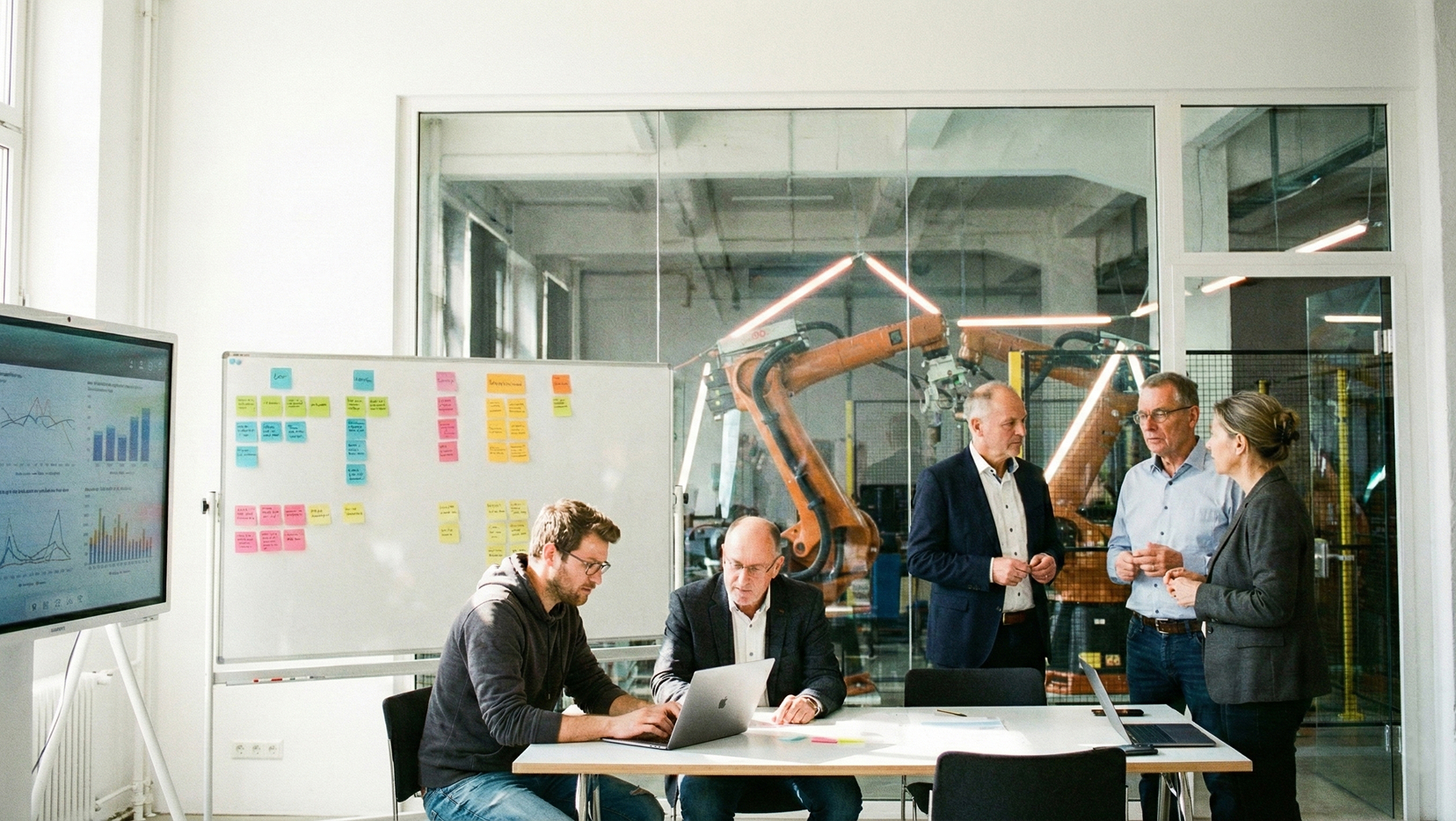
The Master Prompt – Bridging Business Context and User Goals in AI Product Development
Structuring the Information Baseline
A functional prototype requires a robust foundation. Therefore, the process begins with the targeted acquisition of the business context. A focused stakeholder interview upfront defines the essential parameters: the primary problem space, target audiences, and anticipated user flows. This business input is supplemented by technical raw data, such as extensive JSON files containing the company's actual product data and filter structures.
This early phase already lays the groundwork for effective AI prototyping, ensuring that both business and technical inputs are structured for rapid iteration.
Unifying Business Requirements and User Goals
The gathered information serves to interlock business requirements directly with user tasks. Clear interaction paths are defined that the prototype must accommodate—from navigating complex product catalogs to booking an appointment with a sales expert. This strict alignment with the user ensures that the product solves real-world use cases.
Systematic Generation of the Master Prompt
To translate these diverse raw data points and constraints into a precise instruction set, we deploy Copilot agents. These agents extract the relevant data points from stakeholders and internal IT to create the so-called "Master Prompt". This comprehensive document links the target solution, user groups, and defined user flows with system guidelines and structured database information. It acts as the central control unit to purposefully instruct the AI in generating the initial functional prototype.
Within the broader context of AI product development, the Master Prompt ensures consistency, scalability, and clarity across all generated outputs.
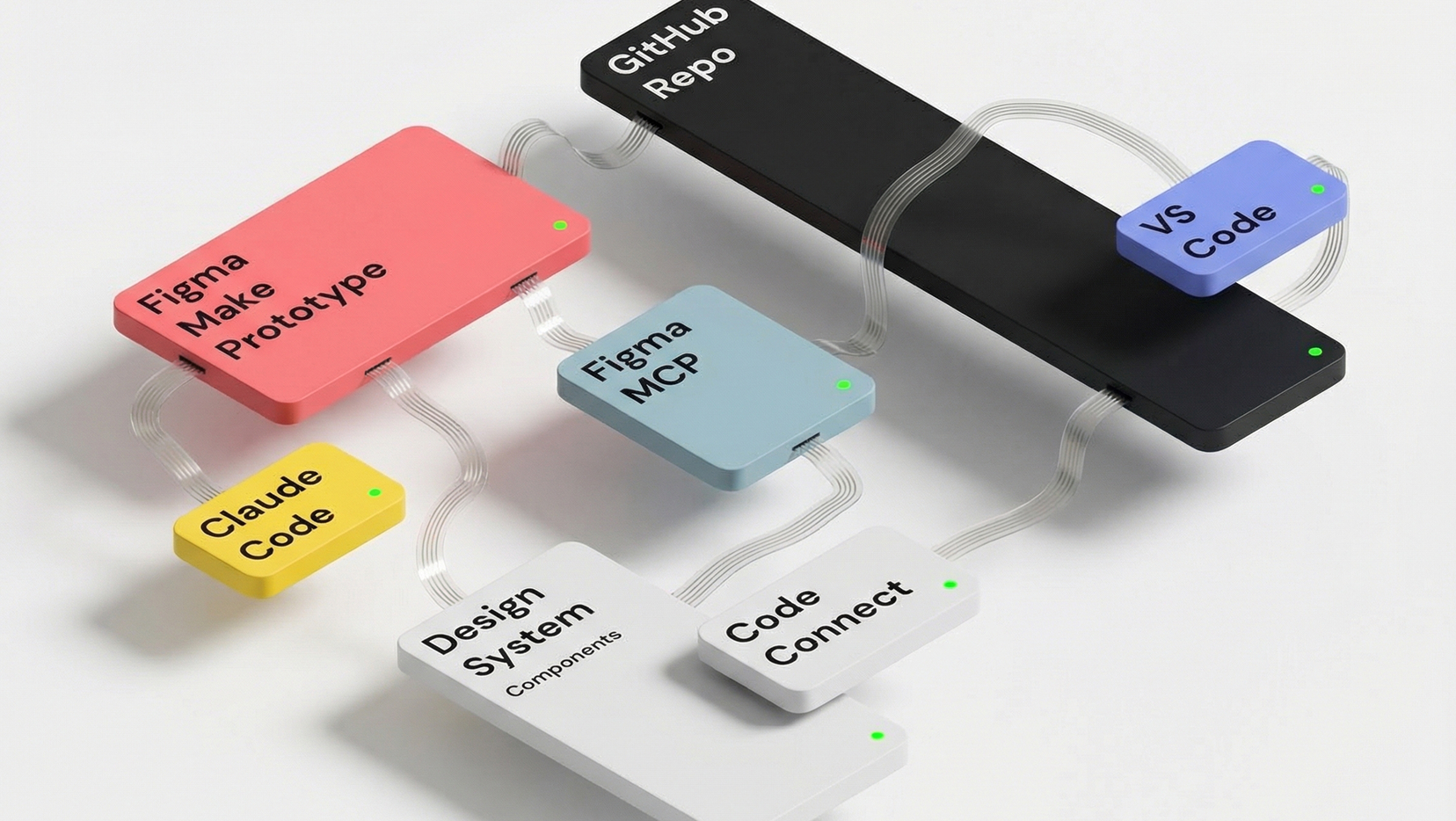
Technical Setup, Architecture, and Handover
The Technical Foundation for Enterprise Standards
To maintain focus on a viable product, our setup leverages existing enterprise standards. Initially, we evaluate various AI models in parallel to ensure the highest precision for the specific use case. The generated prototype integrates existing design systems and adheres to W3C accessibility standards. Utilizing development environments like VS Code, we extract Design Tokens directly from Figma libraries, transfer them into a Design System Manifest, and technically enforce the adherence to Corporate Identity.
The Tandem Approach in Workshops
Direct collaboration is most evident in our tandem approach during the workshop. While the Design Stream iterates the user interface based on feedback, the Architecture Stream runs concurrently. Here, we evaluate the client's systemic landscape and architectural constraints in parallel. This synchronous workflow ensures that stakeholders' functional ideas are immediately verified for technical feasibility within an enterprise environment.
Seamless Handover to Development
The true value of this process becomes apparent during the seamless transition into development. Once the prototype is functionally approved, the deliverable is pushed into a GitHub repository as a structured codebase, including all guidelines and the Design System Manifest. Concurrently, we automatically generate detailed User Stories and structured project documentation (Implementation Roadmap) from the validated prototype. Developers thus receive a comprehensive starter package. The functional scope is clarified, and development work can commence immediately on a validated, user-centric foundation.
This ensures a smooth transition from AI prototyping to full-scale AI product development, minimizing friction between concept and execution.
Conclusion & Outlook
With Rapid AI Prototyping, we transform the often tedious conception phase into a collaborative, highly efficient process. The outcome is a well-founded, documented, and thoroughly testable baseline for decision-making. The product vision is validated directly on a tangible application alongside stakeholders.
In the next step, we will explore how to build the actual functional and architectural logic from this validated prototype to prepare it for production deployment. We will cover this in Part 2 of this series: Architecture & Functional Logic.



More related topics
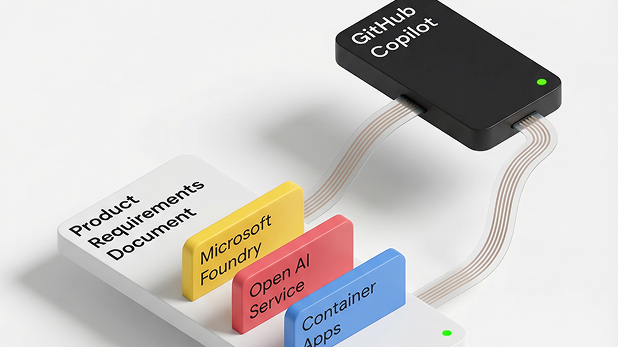
Architecture & Functional Logic: Transitioning from Prototype to a Secure Enterprise Architecture
How do we responsibly transition this concept into a scalable, production-ready system?
Read More
Content Design in the Era of GenAI: Why the Human Touch Still Wins
Generative AI can produce endless content, but it still lacks what truly matters: human judgment, empathy, and taste. This article explores why content designers remain essential in turning automated output into meaningful user experiences.
Read More